If you've got gutter guards installed on your home in Houston, you might think you're done worrying about gutter maintenance. The pitch is straightforward: guards keep leaves and debris out, so you never have to clean your gutters again. The reality is messier. Gutter guards reduce the amount of debris that lands in your gutters, but they don't stop it completely. In Houston's humid climate with heavy rain and trees that shed year-round, even the best guards let material through, trap sediment on top, and create their own maintenance headaches. Knowing what guards actually do and don't do helps you make smarter decisions about protecting your home.
## How Gutter Guards Actually Perform in Houston's Climate
Gutter guards come in several types: mesh screens, foam inserts, brush systems, and solid covers with side slots. Each one stops some debris, but none stops all of it. Houston's weather patterns work against them. Our heavy spring and summer rains come fast and hard. When water hits a roof and rushes toward the gutters, it carries granules from asphalt shingles, dirt, pollen, and fine material. These particles are small enough to slip past most guard systems or settle on top of them. Add in our oak trees, which drop leaves and pollen in waves, and you get a steady supply of stuff that either gets through the guard or piles up on its surface. Solid covers with slots are better at blocking large debris, but they're also more expensive and can actually dam up water during heavy downpours if they're not sized and pitched correctly.
## Sediment Buildup on Top of Guards
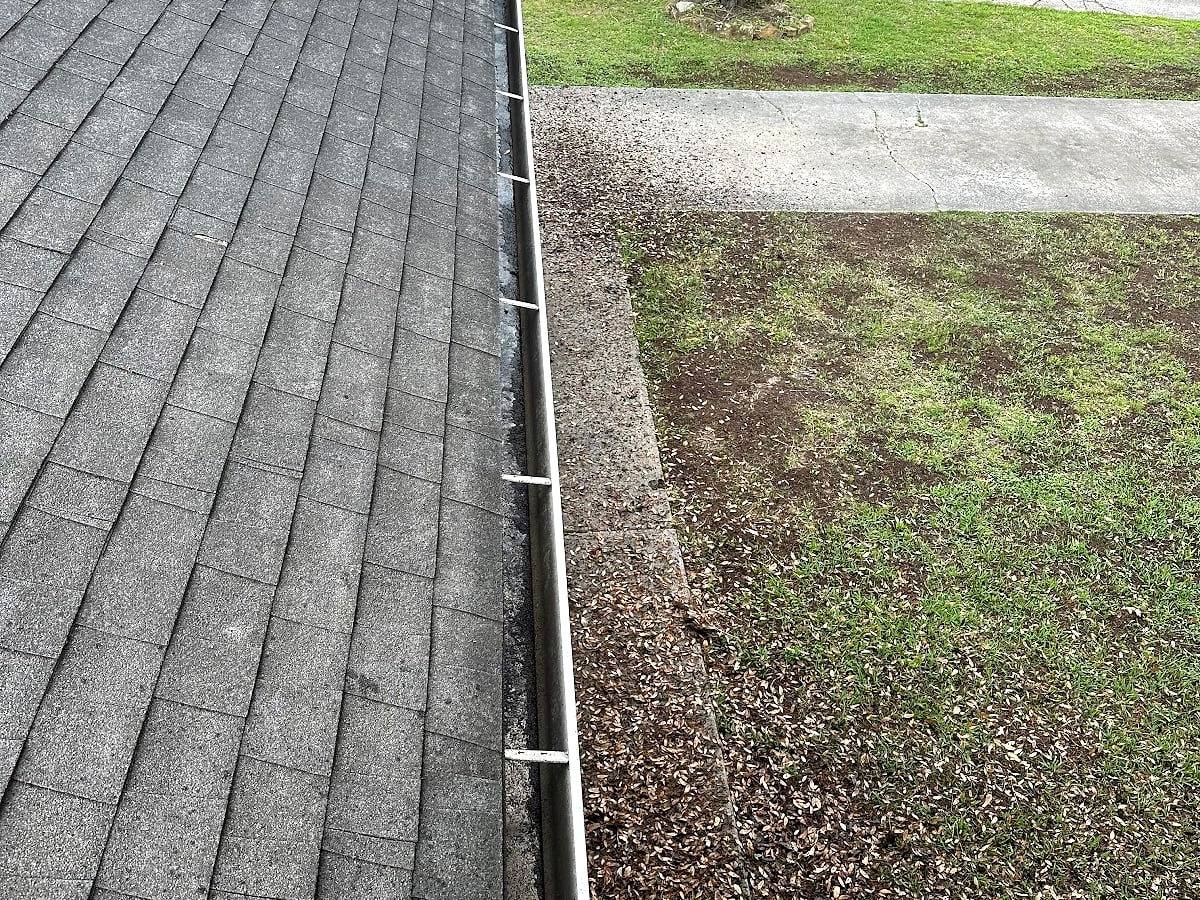
One thing homeowners don't always expect is that debris accumulates on the guard itself, not just inside the gutter. In Houston's humidity, that buildup becomes a problem fast. Leaves, twigs, and dirt settle on the surface of your guards. When it rains, the water washes some of it into the gutter, and some of it just sits there. Over time, that layer of decomposing leaves and sediment becomes a mini ecosystem. Moss and algae grow on it. The material traps moisture against the guard and the roof edge. You end up with a damp, organic mess that can damage the fascia board underneath, especially on the north and east sides of your home where shade keeps things wet longer. The guard itself can become slippery and unsafe to walk on if you ever need to access your roof.
## Standing Water and Overflow Problems
When guards get clogged or when fine sediment builds up underneath them, water doesn't drain the way it should. Instead of flowing freely into the downspout, water pools in sections of the gutter. In Houston's heat, standing water becomes a breeding ground for mosquitoes within days. It also puts extra weight and stress on the gutter system, especially where the gutter attaches to the fascia. If water overflows because the guard is blocking proper drainage, it runs down the side of your house, potentially seeping into the foundation or basement. This is particularly risky in Houston, where soil composition and drainage patterns already make foundation issues common. A guard that looks fine from the ground might be creating a serious water management problem you can't see.
## The Real Maintenance Picture
Here's what guard companies won't emphasize: guards need maintenance too. Depending on the type, you might need to clear debris off the top once or twice a year. You might need to check that water is flowing freely through the slots or mesh. If your guard is the foam insert type, it eventually compresses and becomes less effective. Brush-style guards collect debris in the bristles and need to be cleaned out. You're not eliminating the job; you're just changing it. And if your guard becomes clogged or damaged, getting it removed to clean the gutter underneath is more work than just cleaning the gutter in the first place would have been.
## Smart Gutter Management in Houston
The best approach in Houston is usually a combination strategy. If you already have guards, keep them maintained. Have your gutters inspected and cleaned at least once a year, preferably in late fall after the heaviest leaf drop and again in spring. If you don't have guards yet, consider whether the cost is worth the reduction in cleaning frequency. For many Houston homes, especially those with large trees nearby, a regular professional cleaning schedule is more cost-effective and reliable than guards. Professional cleaning includes clearing any debris that's accumulated on top of guards, checking downspout flow, and spotting problems like damaged fascia or improper pitch before they become expensive repairs.
TruShine Window Cleaning Company Ltd has been serving Houston homeowners for years, and we see the gutter guard situation play out regularly. We can inspect your gutters, clean them properly regardless of whether you have guards, and give you honest advice about what makes sense for your home. Call us today to set up a gutter cleaning or inspection.