A lot of Houston property owners grab a pressure washer without much thought and end up with gouged concrete, splintered siding, or stripped paint they'll be paying to fix for years. The machine is powerful, but that power needs respect. We've seen the damage firsthand, and it's almost always preventable. If you're thinking about tackling your driveway or the side of your house with a pressure washer, understand what can go wrong and how to avoid it.
## Too Much PSI for the Job
The biggest mistake is cranking the pressure up to maximum and assuming higher numbers mean better cleaning. A typical pressure washer sits between 2500 and 4000 PSI. Concrete driveways in Houston can handle around 3000 PSI if you're careful, but push it to 4000 or higher and you're grinding away the surface. The top layer of concrete isn't just cosmetic. It protects the base underneath from water penetration, which in our humid Houston climate means you're inviting mold and deterioration.
Wood siding is worse. Most residential siding fails at 1500 PSI or less. You'll see homeowners use 3000 PSI on their fiber cement boards or wood and wonder why they've got splinters, exposed grain, and places where water will now seep behind the boards. Start low. You can always increase pressure if needed. You can't undo gouges.
## Holding the Nozzle Too Close
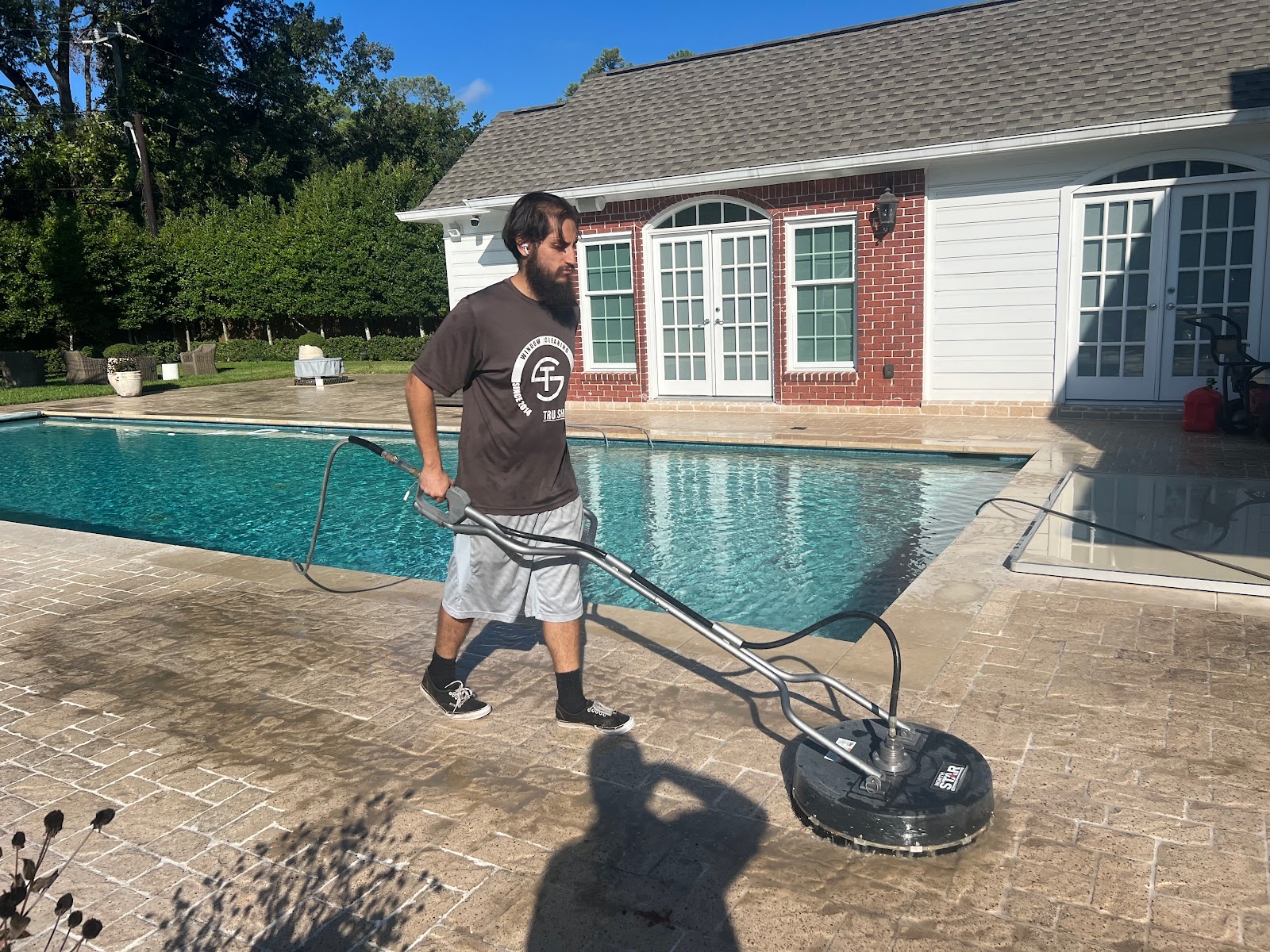
Distance matters as much as pressure. When you hold a pressure washer nozzle six inches from a surface, you're concentrating all that force into a tiny spot. Move it back to two or three feet and the pressure spreads out. The cleaning action is still effective, but the risk of damage drops significantly.
A common pattern we see on Houston driveways is a groove running down the middle where someone held the nozzle steady while walking. The concrete didn't stand a chance. Keep the nozzle moving and maintain distance. Your arms will get tired, but your driveway will survive.
## Ignoring Angles and Surfaces
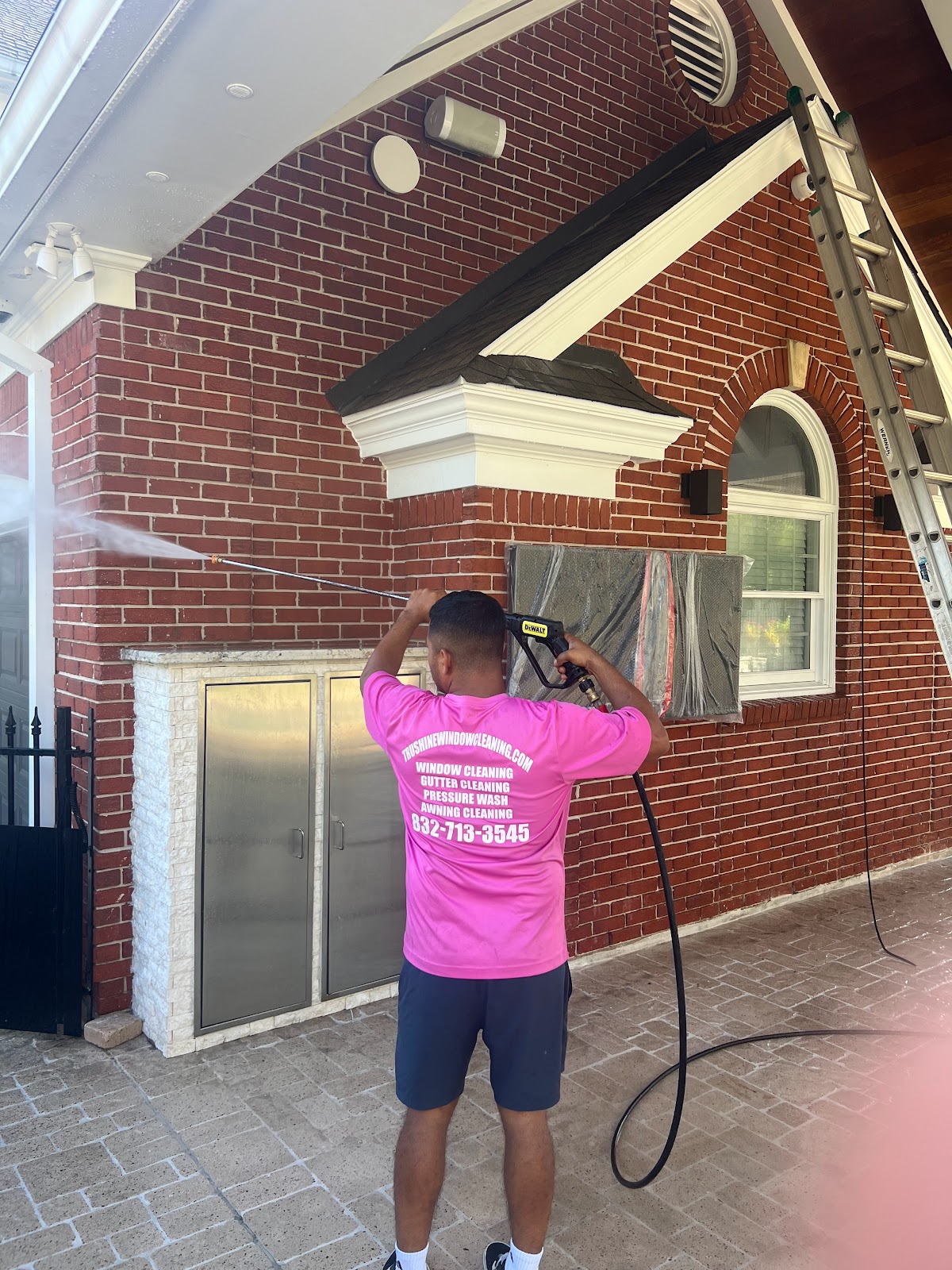
Pressure washers work differently depending on what you're cleaning. Horizontal surfaces like driveways need a different approach than vertical siding. On driveways, a 45-degree angle is safer than shooting straight down. On siding, always spray downward or at a slight downward angle so water runs off rather than getting forced behind the boards.
Houston's clay soil and frequent humidity mean water already wants to get into everything. You don't need to help it along by forcing water upward into your siding gaps or under your trim. That's how you end up with mold colonies inside your walls.
## Skipping the Detergent Step
Pressure alone shouldn't be your only cleaning method. Using a low-pressure detergent first, letting it sit for a few minutes, then rinsing with moderate pressure gets you better results with less risk. The soap breaks down the dirt and algae so you don't have to rely on pure force to remove it.
In Houston, we deal with a lot of mold and mildew on driveways and siding because of the humidity and shade. A detergent designed for these problems will handle most of the work. Then you can use lower pressure to rinse, which means less chance of damage.
## Not Testing on Hidden Areas First
Before you pressure wash your whole driveway or the front of your house, test your setup on a small, inconspicuous spot. Wash a corner of the driveway in your backyard or a section of siding behind a shrub. See how the surface reacts at your chosen pressure and distance. This takes fifteen minutes and can save you thousands in repairs.
Different driveways age differently. A driveway that's been sealed recently might handle pressure better than one that's been exposed to Houston sun for ten years. The only way to know is to test.
## Pressure Washing vs. Soft Washing for Delicate Surfaces
If you've got stained or painted surfaces, consider soft washing instead. Soft washing uses low pressure, around 500 PSI, combined with specialized cleaning solutions. It takes longer and requires more skill, but it gets the job done without destroying what you're cleaning. Painted trim, vinyl siding, and stained concrete all benefit from soft washing.
This is where hiring a professional makes sense. A company that knows Houston's climate and building materials can choose the right method for your specific situation. We've moved into soft washing for a lot of our work because the results are better and the risk is lower.
## Know When to Call a Professional
If you're uncertain about pressure, distance, or technique, it's worth calling someone who does this regularly. A pressure washer is a tool that demands respect, and mistakes are expensive. A professional assessment costs far less than repairing gouged concrete or water-damaged siding.
Trushine Window Cleaning Company Ltd serves Houston property owners who want their homes clean without the risk. We handle pressure washing and soft washing on driveways, siding, and other exterior surfaces with the right technique for each job. If you're not confident doing this yourself, give us a call. We'll make sure your property gets clean the right way.